


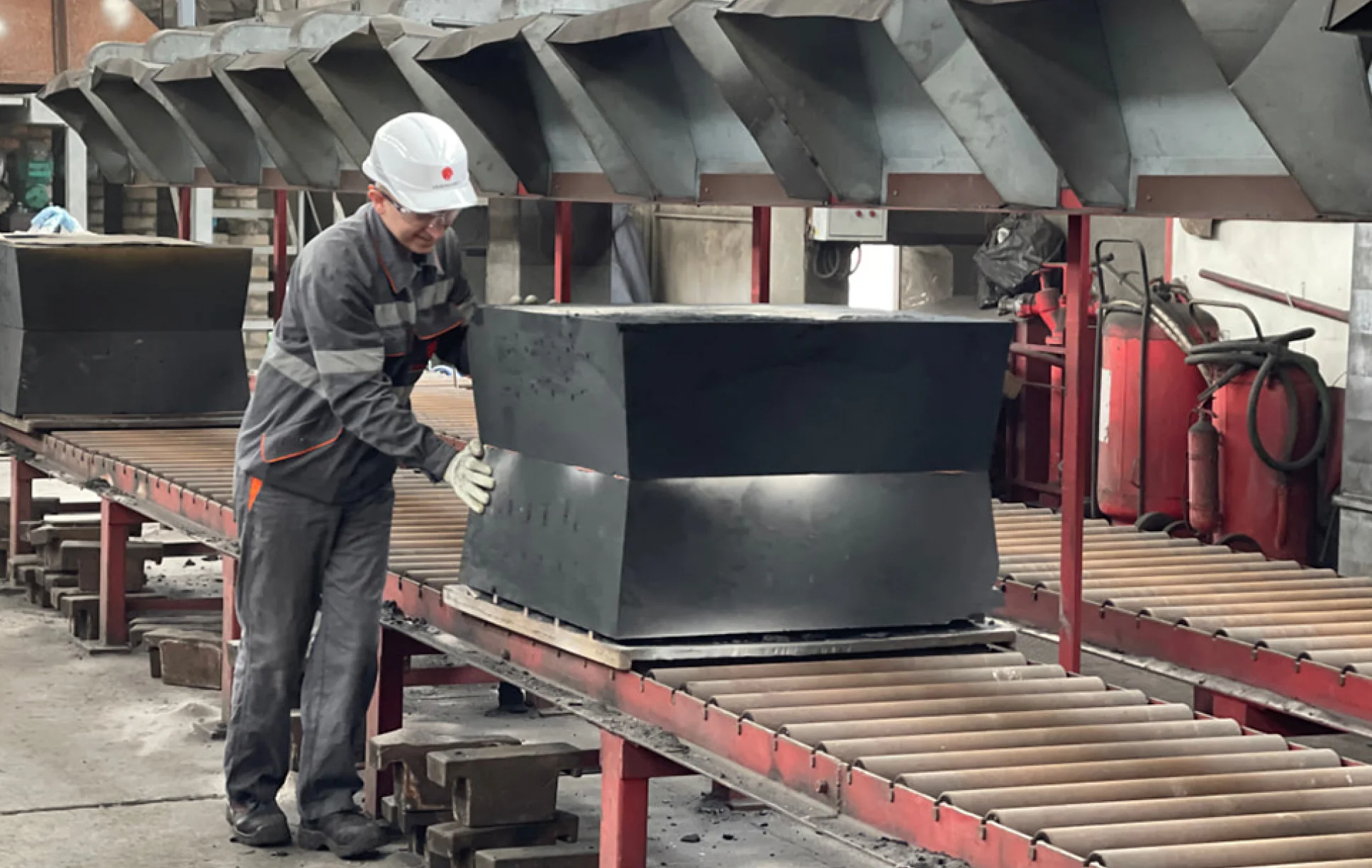
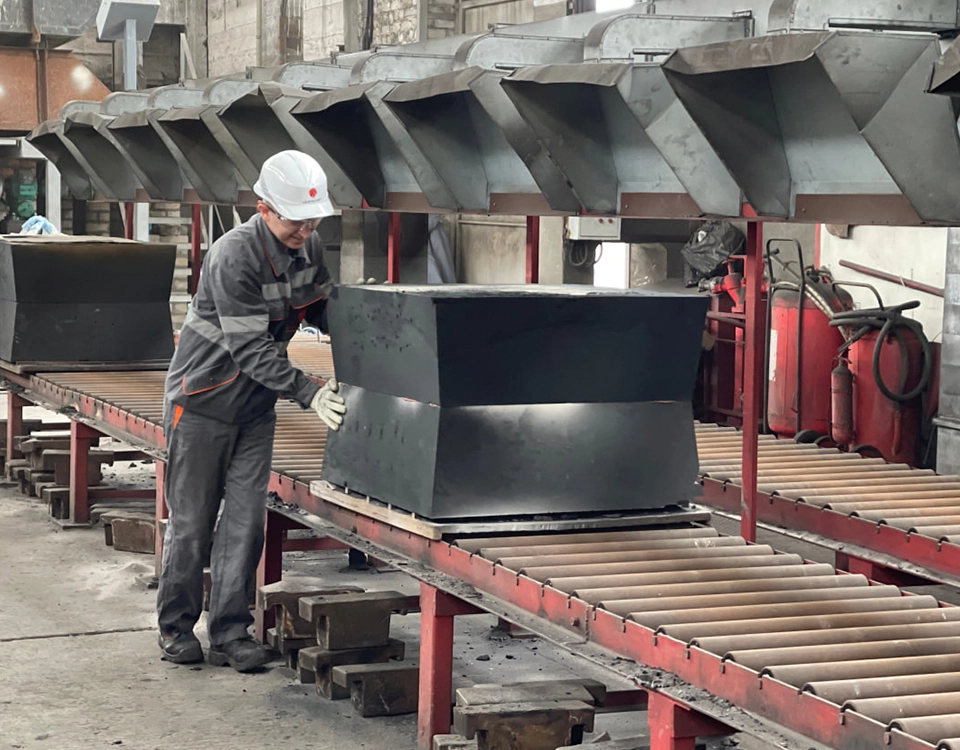
The technological process of manufacturing molds and rods directly depends on the characteristics of the molding mixtures. The properties of the castings, the accuracy of their geometric dimensions and roughness also depend on the quality of the equipment. The most common are mixtures obtained on the basis of various types of binders that harden in air without the need for heating (HCS). These can be synthetic resins or liquid glass.
HTS casting technology in foundry production.
The main goal of CTS in foundry production is to create optimal conditions for molding and casting metal products.
During the production of molds and cores, the composition of the XTS molding mixture is selected in such a way as to ensure high quality castings, allow for the regeneration of the molding mass, reduce the amount of toxic emissions and the cost of materials.
The casting method is based on the properties of the sand-resin mixture to harden under the influence of a catalyst. The composition of the core mixture of the phenol-formaldehyde base HTS allows you to produce complex castings of high quality. This ensures good surface cleanliness and maintains the accuracy of geometric dimensions.
Such quality indicators cannot be ensured during casting in sand-clay molds. Since in this case the requirements of low humidity, sufficient level of gas permeability, and dimensional accuracy are not met. To obtain the required humidity when using a sand-clay mixture, prolonged drying is required, which significantly increases energy consumption and increases the duration of the technological cycle.
HTS mixtures may contain binders that provide strength to molds and molding blocks. They may also include components that protect the metal from oxidation at high temperatures, which is very important for preventing defects on the surface of the casting.
Advantages and disadvantages of using CTS in foundry production
The advantages of making molding materials from cold-hardening mixtures, the composition of which is selected depending on the casting material, include:
- high quality products due to dimensional accuracy;
- no deformation during mold production, small number of defects;
- reducing the cost of production through the use of simpler equipment;
- the possibility of automating the cooking process;
- reduction of energy consumption due to the absence of a drying operation;
- possibility of sand regeneration;
- reducing the labor intensity of finishing operations.
Due to the listed advantages, cold-hardening mixtures are increasingly used in foundry production. However, there are also disadvantages:
- chemical composition of binders, which are subject to special requirements during operation and storage;
- The composition of the CTS does not contain nanomodifiers that could affect the modification of the molding compound and the melt crystallization process.
Prospects for the application of HTS casting
The use of CTS in the foundry industry is gaining more and more popularity. Scientists continue to work to improve the composition of CTS and make it more environmentally friendly. The use of CTS in production allows you to reduce energy consumption and the number of scrap. It also helps to improve product quality and production profitability.
The Ukrfavorit team has been implementing the HTS process at Ukrainian foundries for more than 15 years. To exchange experience and improve their skills, our specialists have visited more than 30 European companies and annually attend industrial exhibitions both in Ukraine and abroad.
We have examples of successful transition from PGS process to HTS. Our clients note the following benefits:
- increasing strength and reducing shape defects;
- reduction of the production cycle due to more efficient use of CTS;
- reduced scrap and higher productivity, which led to savings in production costs.
The general idea is that CTS plays a key role in foundry production, providing a means to optimize processes and improve the quality of metal products. An important advantage of this casting method is that scientists are interested in improving the CTS process to create even safer materials that will meet modern industry standards.
For advice on the use of HTS and other issues related to foundry production, contact the Ukrfavorit team, we will be happy to help you!
E-mail: info@ukrfavorit.com.ua
Call:
0800339285 (free)
Ukrfavorit Press Service


