


Improving the quality of foundry products, increasing their reliability and durability is an urgent requirement of our time.
Despite the steady trend of increasing the production of castings from non-ferrous alloys, today, more than 70% of castings are made from cast iron.
Possessing a complex of valuable technological, foundry, physical-mechanical and service properties with high economic indicators, cast iron remains the main structural material for a wide range of cast products for various purposes, which are used in metallurgy, mechanical engineering, automotive engineering, shipbuilding, military equipment and means, as well as other industries.
At the same time, modern industrial production places increasing demands on the quality of cast blanks (parts), which necessitates the production of cast iron castings with improved structure, as well as increased mechanical and operational characteristics.
Recent studies show that the most effective means of increasing the mechanical and service properties of cast iron castings, both due to changes in the shape of graphite and the effect on the structure formation of the metal base, are modification processes, i.e. the introduction of a given amount of additives-modifiers into the cast iron melt.
A modifier is a substance whose introduction significantly changes the structure and properties of the liquid metal or alloy it processes.
According to the nature of the effect on the structure of cast iron, the melt is divided into graphitizing, carbide stabilizing, and spheroidizing modification.
Graphitizing modification is usually used to treat molten cast iron with a low carbon equivalent (up to 4.3% C according to the Fe-C phase diagram) in order to reduce the likelihood of the formation of structurally free cementite, as well as eliminate bleaching (especially in thin-walled castings) to form a given structure of gray cast iron with graphite inclusions of the required size, shape, distribution, and quantity.
In addition, graphitizing modification increases the isotropy of the structure and mechanical properties of cast iron in shaped castings with different wall thicknesses of complex configuration, increases the duration of the effect of the modification process, which is especially important in the manufacture of large thick-walled castings (with a wall thickness of more than 100 mm).
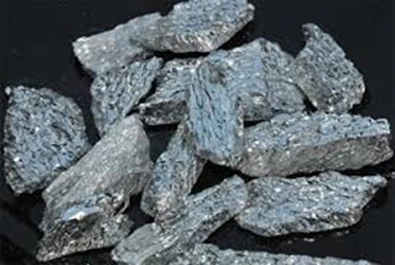
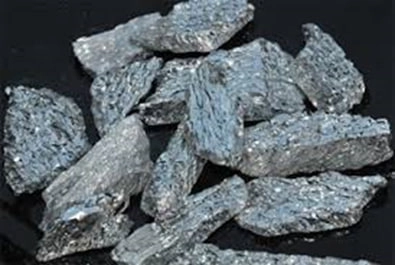
Recently, a number of complex graphitizing modifiers have been developed and supplied, which include a complex of active elements, such as Ca, Al, Ba, Mn, Zr, Sr Si. Among the existing modifying additives used in practice for graphitizing treatment of the melt, one of the common and cheap modifiers is ferrosilicon with a 45% or 75% silicon content (grades FS45 and FS75, respectively). Along with ferrosilicon, effective graphitizing modifiers for cast irons are also silicobarium (SiBa, for example, grades SB5), ferrosilicobarium (FeSiBa), Barinoc 75 inoculant, silicocalcium (SiCa, for example, grades SK15, SK20), Alinok 75 inoculant, silicostrontium (SiSr), etc.
To increase the strength, wear resistance and other special performance characteristics of cast iron in castings, and most often to obtain a bleached cast iron structure with hard iron carbides and other chemical elements, as well as to pearlitize the cast iron structure, it is treated with various carbide-stabilizing additives. Such elements include Mn, Cr, Mo, V, W, as well as complex additives and ferroalloys containing the listed elements.
There are known cases where it is possible to use the following elements as a carbide-stabilizing modifier, such as bismuth and tellurium, individually or in combination, in particular in the production of castings with a bleached surface (for example, rolling rolls, molds, as well as other wear-resistant parts).
The processes of spheroidizing molten iron are of greatest interest, which are carried out with the aim of obtaining spherical or vermicular graphite inclusions in the structure of cast iron castings, and as a result, increasing the strength, and especially importantly, the plastic properties of cast iron.
The following spheroidizing elements are used: Mg, Ca, Ce, Y, and other rare earth metals, both in pure form and in the form of complex alloys, depending on the method of processing the melt (for example, in a sealed autoclave, open or closed ladles, in a jet of liquid metal, inside a casting mold, etc.).
In recent years, domestically produced lightweight complex spheroidizing modifiers of the ferrosiliconmagnesium (FSMg) type have become widespread. The density of such modifiers can range from 1.8 to 2.5 g/cm3.
A number of domestic and foreign enterprises also use effective complex spheroidizing modifiers such as Lamet nodulariser, CompactMag, Elmag nodulariser (produced in Norway), which contain either individual rare earth elements (La, Ce) or an alloy of a mixture of REMs.
In addition to the above modifiers, the so-called “heavy” spheroidizing additives (ligatures) in the combination of Ni-Mg, Ni-Mg-Ce, Ni-Fe-Mg, Ni-Cu-Mg with the addition of rare earth metals are used. The density of such heavy modifiers can be from 7.0 to 8.0 g/m3.
To obtain vermicular graphite in the structure of cast iron, ferrosiliconmagnesium complex light modifiers of the FSMg type are used (in a smaller amount than in spheroidizing modification – up to 1.0% of the modifier mass) or so-called inoculating modifying additives (inoculators), which contain such active chemical elements as Si, Al, Ca, Ti, rare-earth metals, etc.
Таким чином, проведений аналіз існуючих видів модифікувальних добавок підтверджує перспективність процесів модифікування для отримання чавунних виливків (литих заготовок) із підвищеними механічними, експлуатаційними та спеціальними характеристиками.
The main advantage of the listed graphitizing, carbide stabilizing, and spheroidizing modifying additives is the stability of obtaining the specified structure and properties in cast iron castings.
Each type of modifying additive has its own rational and optimal field of application. At the same time, when choosing a modifier, it is also necessary to take into account the technology of processing the melt with them (modes, methods of introducing modifiers into the molten iron), as well as the thermophysical and chemical properties of the modifying additives, their quantity, granulometric composition, etc.
Technical specialists of UKRFAVORIT LLC can provide advice on the analysis, selection or recommendations of the required type of modifying additive, depending on the given structure and properties that need to be obtained in cast iron castings of various nomenclature.
We invite interested enterprises, organizations, and companies in the foundry industry to fruitful cooperation.
How to contact us?
Write to us: info@ukrfavorit.com.ua
Call us: 0800 33 92 85 (toll-free).
Scan the QR code and join our social networks!

Together we move the industry forward!
Phone:
+38 (067) 333-92-85
+38 (066) 333-92-85
+38 (044) 333-92-85
Ukrfavorit Press Service


